Nikola Josevski on building better channels for capital to reach the economy
By Denar
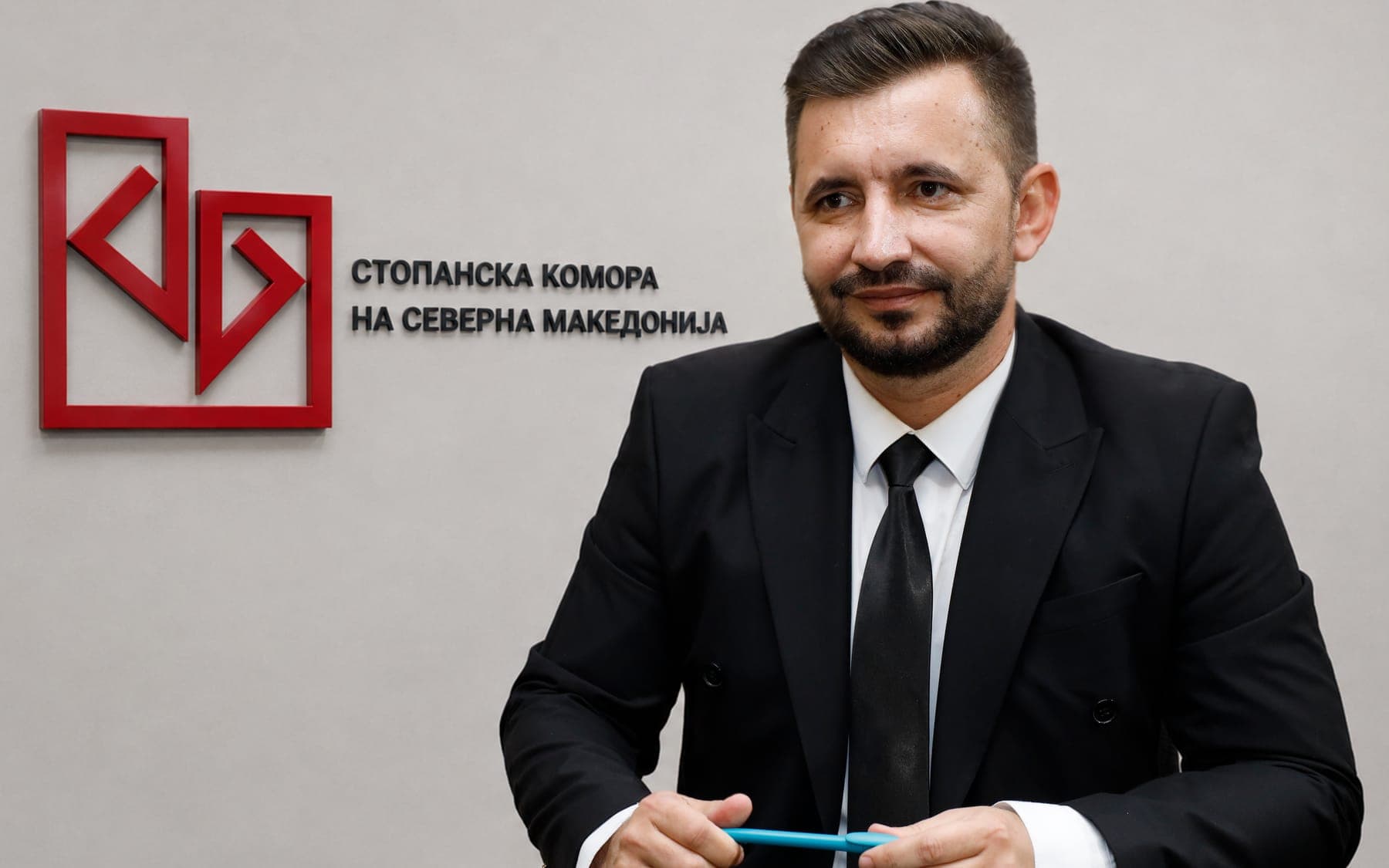
The financial sector needs to do more than generate capital. It needs to build better channels for that capital to reach the economy.
Non-bank finance in North Macedonia is entering a more mature phase, with a stronger regulatory framework, greater emphasis on responsible lending and a growing role for technology in how individuals and businesses access financial services.
Cooperation between banks, non-bank financial institutions, savings houses and fintech companies is also becoming increasingly important and dynamic. New technologies are reshaping lending, European regulation is raising standards, and small and medium-sized businesses are seeking faster, more flexible sources of capital.
In this interview with Denar, Nikola Josevski, President of the Group of Non-Banking Financial Institutions (NBFI Group) at the Economic Chamber of North Macedonia, discusses the sector's development, the work needed to build trust, the impact of artificial intelligence on lending and why he sees closer cooperation between financial institutions as essential to the future.
The conversation takes place ahead of MicroBalkans 26, which will bring more than 200 financial sector experts from 15 European countries to Skopje on 24 and 25 September under the theme “Lending Reimagined”.
Denar: Non-bank finance companies have become an increasingly visible part of the financial market in recent years. Where does the sector stand today? Does it still need to explain what it does, or is it time to demonstrate the value it creates?
Josevski: I think the sector is moving into that second phase. It is no longer enough to explain what non-bank finance is. We need to demonstrate the practical value it creates for individuals, entrepreneurs, small businesses and the economy as a whole.
Non-bank financial institutions are a regulated part of the financial system, with a clearly defined role. Our role is to complement the banking sector, not replace it. We can respond to certain customer needs with greater flexibility, faster service and the use of technology.
In my view, the next phase is one of maturity. That means higher standards, greater transparency, wider use of technology and an even stronger sense of responsibility towards customers.
Denar: Public perceptions of non-bank lending are not always positive. How much responsibility do finance companies themselves bear for this?
Josevski: Some of the responsibility always lies with the sector itself, and we should acknowledge that.
Trust cannot simply be asked for. It has to be earned through transparent terms, clear communication, fair treatment of customers and consistent compliance with the rules.
That is why I believe we should not see regulation and high standards as constraints on development. A system with clear rules is the foundation of trust and a prerequisite for a mature, sustainable market.
Customers must know clearly and in advance what they are receiving, how much it will cost and what their obligations are. Responsible lending goes beyond regulatory compliance. It is a business model built around long-term customer relationships rather than short-term results.
Denar: How do you see the relationship between banks, savings houses and non-bank financial institutions within this system? Is it about competition, or is there room for closer cooperation?
Josevski: The financial system is too complex to view solely through the lens of competition.
Banks, savings houses and non-bank financial institutions have different models, capabilities and strengths. Those differences create considerable scope for them to complement one another and work together.
Banks bring capital, established networks and many years of experience. Savings houses play an important role in access to finance and have close relationships with particular customer groups. Non-bank financial institutions bring flexibility, speed and strong digital capabilities. Fintech companies contribute technologies that are changing the entire process.
I do not believe any single institution or model will define the future. It will depend on how well the different parts of the financial system connect and complement one another.
Denar: Access to capital for micro, small and medium-sized enterprises is a frequent topic of discussion. Where can the non-bank sector make the greatest difference?
Josevski: Small businesses have different financing needs at different stages of their development. They may need funding for an investment, working capital, a seasonal requirement, new equipment or a growth opportunity that demands a quick response.
That is why the economy needs a wider range of financing channels.
It is not a matter of choosing between a bank and a non-bank financial institution. Different financial institutions can meet different needs at different points in a company's life cycle.
The broader and more diverse the financing options, the greater the chance that a sound business idea will lead to an investment, a new product, a new job or a growing company.
Denar: Financial inclusion is often associated with non-bank finance. Where do you draw the line between wider access and the risk of irresponsible borrowing?
Josevski: This is where the maturity of a financial system becomes apparent.
Financial inclusion means giving people and businesses access to suitable, understandable financial services offered responsibly. It does not mean extending credit at any cost.
Wider access must go hand in hand with sound creditworthiness assessments, transparency, consumer protection and financial literacy.
The goal is not simply to give more people access to finance. It is to make sure that access helps them make better financial decisions.
Denar: Artificial intelligence and data are already changing lending. Where do you see the biggest shift?
Josevski: The change is already under way. Artificial intelligence and data analytics can significantly improve risk assessment, fraud detection, credit scoring, service personalisation and the speed of decision-making.
This is particularly relevant for individuals and small businesses with limited credit histories, where traditional models may have little information to work with.
But speed must never be the only criterion for making a decision.
As we rely more on algorithms and data, questions of privacy, security, potential model bias, the ability to explain decisions and customer protection become increasingly important.
Technology can automate a decision, but it cannot take responsibility for it.
That will be one of the central issues facing the financial sector in the years ahead.
Denar: European regulation is setting higher standards for financial institutions and fintech companies. Is the domestic market ready?
Josevski: It will have to be, because European integration is not solely a political process. It also involves gradually aligning the financial sector with European regulations, standards and practices.
That requires investment in technology, regulatory compliance, data management, consumer protection and institutional capacity.
For any company serious about its business, this should not be seen as a threat. Higher standards create a more predictable market, greater trust and better conditions for long-term investment.
If we want domestic financial companies to compete beyond our national market, we need to see alignment with European standards as part of their development strategy, rather than simply a regulatory obligation.
Denar: These issues will be central to MicroBalkans 26. Why does regional cooperation matter for the future of finance?
Josevski: Western Balkan countries have different markets, but they face many similar challenges. Access to capital, digital transformation, European regulation, financial inclusion, consumer protection and stronger support for small and medium-sized businesses concern us all.
It makes little economic sense for each of us to look for solutions to the same problems in isolation.
Regional cooperation allows us to compare models, learn from practices that work, connect businesses with investors and development institutions, and create a more integrated and visible regional financial market.
That is why it matters that the NBFI Group and the country's two savings houses, which are part of the Economic Chamber, belong to the Western Balkans Alliance alongside organisations from Bosnia and Herzegovina, Albania, Montenegro, Kosovo, Croatia and Serbia. This is also the strength of MicroBalkans: it is a regional platform that remains active between conferences, allowing dialogue to continue through concrete partnerships.
Denar: After Sarajevo and Dubrovnik, the third edition of MicroBalkans comes to Skopje under the theme “Lending Reimagined”. What would you like to see remain after 25 September?
Josevski: I would like us to achieve more than a successful conference.
For me, “Lending Reimagined” means recognising lending as part of the infrastructure for economic development, beyond its role as a financial product.
The availability of capital is only the starting point. We need to consider how accessible it is, how effectively it is allocated, how technology makes it easier to obtain and whether regulation supports innovation while protecting customer trust.
In Skopje, financial institutions, regulators, investors, fintech companies and development partners from the region and across Europe will come together. That gives us an opportunity to move from identifying problems to developing partnerships and solutions.
The question is no longer whether the financial sector will change. It is how quickly we can build a system in which capital, technology and regulation work together to benefit the real economy and every individual.
If MicroBalkans 26 contributes to that, Skopje will be more than a conference host. It will be the starting point for an important regional conversation about the next phase of the financial sector.